
Awake In The Dream
A Zen Monk and a Hindu Housewife embodying nonduality — my talk at Kintsugi Ranch

I was lucky enough to speak at Kintsugi Ranch — a land stewardship community in Bastrop, Texas, rooted in permaculture principles, family, nature, and a healthy, connected lifestyle. I was the last ‘Earth Sermon’ of the season on 6/14/26, before everyone melts here in Central Texas for a few months.
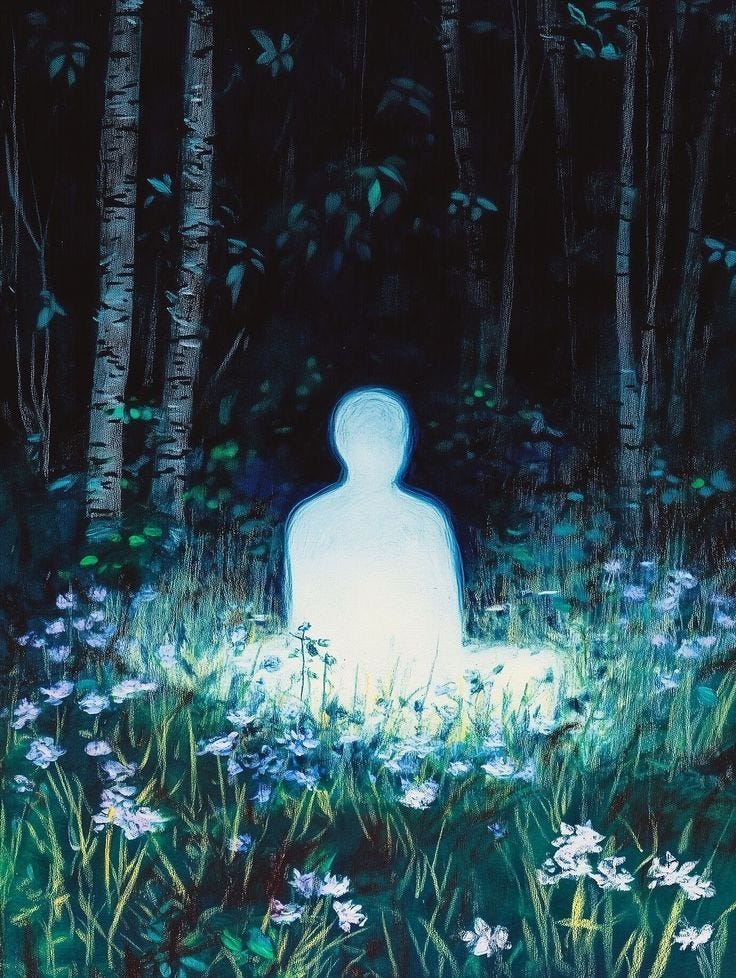
Good morning! I’m Bob Peck, thank you for being here. And thanks to Adrian and Jordan and the Kintsugi fam for having me. I’m a writer, a filmmaker, a husband, a father, a friend, a community member, and none of them, and the Eternal Self behind a temporary skeleton that will eventually dissolve back into the earth. As are you.
It’s 11am on a Sunday, which means somewhere right now a pastor is telling a room full of people that they were born dirty.
We’re gonna do the opposite of that for thirteen minutes.
I wrote a book called Original Sin Is A Lie, and people ask me what that title means, and I tell them:
It just means you’re not dirty.
That’s it. That’s the whole thing. You can leave now if you want.
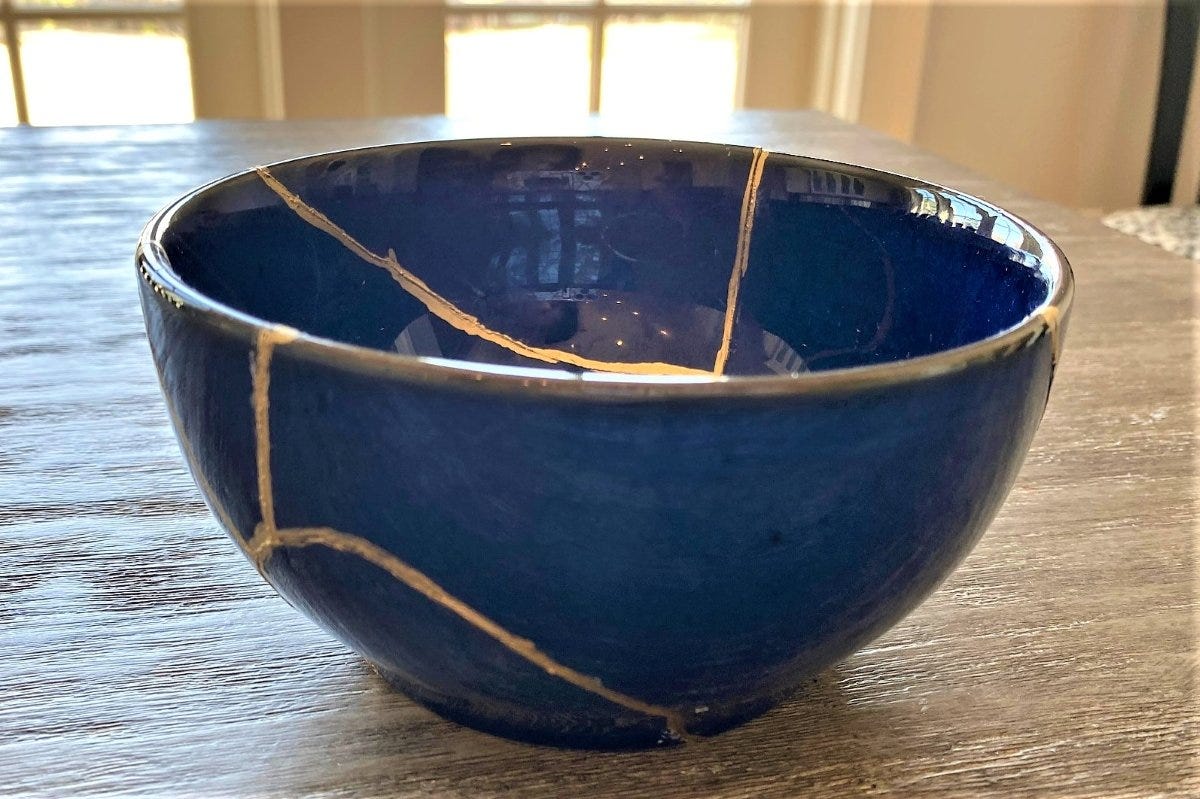
Okay no, because I do want to tell you about the mystics. And honestly, this is the perfect place to do it. This ranch is named after kintsugi—the Japanese art of repairing broken pottery with gold. You don’t hide the crack. You fill it with the most precious thing you have, and the bowl becomes more beautiful and more structurally sound than before it broke.
Forgive my reading, I’m a writer. I wrote this. I didn’t memorize it. I’ll set up slides and a projector next time.
Okay—who here has had a moment, large or small, where the whole thing felt like a dream?
…You’re driving on 71, or holding your precious child, or loading up your bags in the H-E-B parking lot and you see one of those immaculate parking lot sunsets—and you feel a sense of that unnameable interconnected substratum between all creation... the veil shimmers a little bit?
The mystics of world history had that experience too, except it didn’t last a few seconds. It stayed. Across every tradition—Zen monks, Hindu housewives, Christian nuns, Sufi poets—they woke up inside the dream. They became lucid. They saw that the separate, anxious, not-Enough self we walk around defending is a costume. A character in a narrative. An actor in a role. Amy [Bailey] and Adrian [Grenier] know what I’m talking about here.

And what’s profound to me about the mystics & their life stories is that they did not check out.
They didn’t run away.
A couple wound up in monasteries on a hilltop but even those saints were deeply active in the world around them. And they shared their experiences for the benefit of the rest of us. They saw the One in All. Hildegard of Bingen wrote music, theology, medicine, and one of the first sung dramas in history, all from inside the monastery.
The real heroes served. They cooked. They grieved. They got in trouble with the institutions. They fed people. Over and over, across every century and every continent—they were deeply engaged and alive.
So that’s the idea, let’s become awake, in the dream. Both at once. That’s nonduality, but it’s embodied nonduality... Vivekananda calls it “engaged detachment”. And I want to give you two of my favorites this morning: one Zen monk and one Hindu housewife.
In Japan, around 1700, a Zen master named Hakuin lived in a small village temple at the foot of Mount Fuji. He’s revered. Spotless reputation. The whole village bows when he walks by.
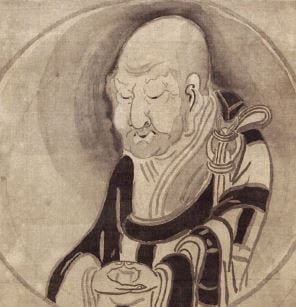
Hakuin’s story begins when he was eight years old, he heard a sermon about the Eight Hot Hells. A vivid warning: boiling, burning, eternal realms... And little eight-year-old Hakuin walked home terrified, with a fear that didn’t leave. It moved in. He spent years convinced he was damned.
A child. Told he was damned. Some of you know that sermon.... You might’ve heard it in Texas instead of Japan. Where my Southern Baptists at?
That terror is what drove him into the monastery. He meditated like a man on fire because he believed he was. But eventually the fear cracked open and he saw what was actually there—and what was actually there was, fine. Better than fine. He’d later write that we’re like someone standing in water, crying out for a drink. The thing that we’re desperate for is all around us, and in us.
Okay. So that’s the awakening. Here’s the embodiment. This is one of my favorite stories in all of the world mystics...
A girl in Hakuin’s village gets pregnant. She was unmarried. Her parents are furious, and they demand a name. In her panic she gives them a name: Hakuin. The holy man.
The parents storm the temple. They scream at him. Fraud. Hypocrite. Disgrace. And this man who spent decades earning his reputation, says three words:

The baby is born and they bring it to him. Here. It’s yours. Hakuin takes the child. He carries it through the village begging milk from the same neighbors who now spit at him when he passes.
His reputation is gone.
His students leave.
He raises the baby anyway. He feeds it. Rocks it for a year.
Eventually the girl breaks down and confesses. The real father was a young man from the fish market. The parents are mortified. They rush to the temple, apologizing, weeping, begging for the child back.
Hakuin hands over the baby and says:
“Is that so?”
That’s the whole story. Praise came—is that so. Blame came—is that so. He wasn’t numb. He loved the baby; you don’t beg for milk for a year out of indifference. He just wasn’t owned by the story that other people were telling about him. He knew who he was underneath it all—he didn’t need the village to agree.
One of his best lines is:
“Meditation in the midst of activity is a thousand times superior to meditation in stillness.”
And to be honest, I am not there. Somebody leaves an ALL CAPS comment on Instagram and sometimes I’m alright, sometimes… well it depends if I’m at the bar. Whereas Hakuin loses everything and says three words.
But that’s the direction. That’s the bowl repaired with gold. The crack in his reputation became the most beautiful thing about him.
Now we travel west. Bengal, India, early 1900s. A village girl named Nirmala. Married off at twelve—that’s how it worked—she was sent to her husband’s household at eighteen to cook and clean and disappear into that role.
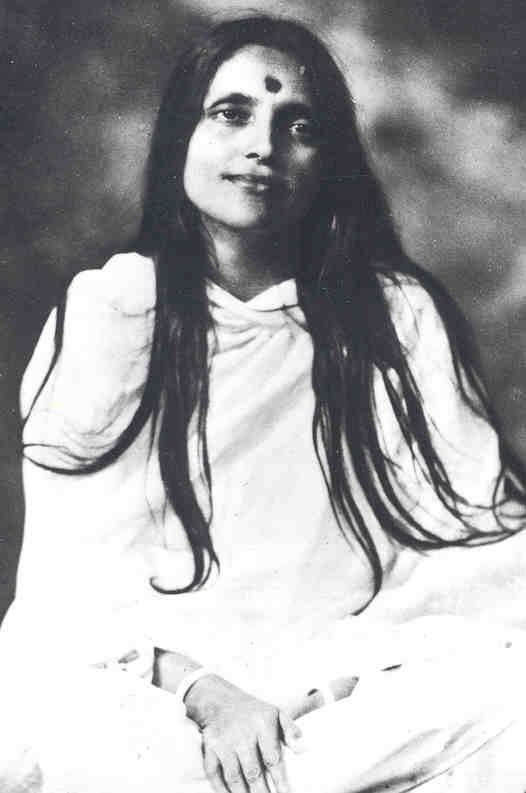
Except she keeps disappearing into something else. She’s washing dishes and would slip into ecstatic trance. Standing at the cooking fire, gone—lit up from inside, chanting names of God nobody ever taught her.
The neighbors said she was sick. Then they said she was possessed.
Her husband took her to exorcists. The exorcists failed. He took her to a doctor, and the doctor watched her for days and finally said: she’s not ill, she’s not possessed, she’s a saint—stop trying to fix her.
This is Ananadamayi Ma.
And the teaching she came back to for sixty years was simple. All of this is God already. She put it this way:
“I find one vast garden spread out, all over the universe. All plants, all human beings are about in this garden in various ways. Each has their own uniqueness and beauty. Their presence and variety give me great delight. Every one of you adds with your special feature to the glory of the garden.”
...Her husband ended up at her feet asking her to be his teacher. But she refused to be called a guru. Their marriage became a spiritual community. Yogananda met her and wept. Gandhi sent his closest aide to sit with her.
And yet, she still did the dishes.
One of the most awakened beings in India—and after the trance lifts, she finishes the cooking. She runs the household. Because if the whole universe is one vast garden, then the kitchen is in the garden. There’s no out. It’s all unfolding beautifully, constantly, in the profundity and mundanity.
I learned that one personally. Years ago I’m deep in meditation—energy rising, the whole thing, I’m thinking, this is really a powerful moment—and my son toddles by smelling like an overflowed toilet.
No offense, Bobby.
Look, that wasn’t the interruption of the spiritual moment. That was the spiritual moment. Samadhi and the dishes. Transcendence and the diapers. All sections of the garden. Jesus says “In my Father’s house there are many mansions...” John 14:2.. See? We’d get a Bible verse today at some point.
Okay. Hakuin and the baby. Ma and the dishes. Beautiful stories.
But here’s the practical closing... How are we to walk the tightrope? The Immanent / and the Transcendent? We must save the world / The world is an illusion; Attachment / Apathy; An appreciation for the Cosmic Play / alongside letting go??
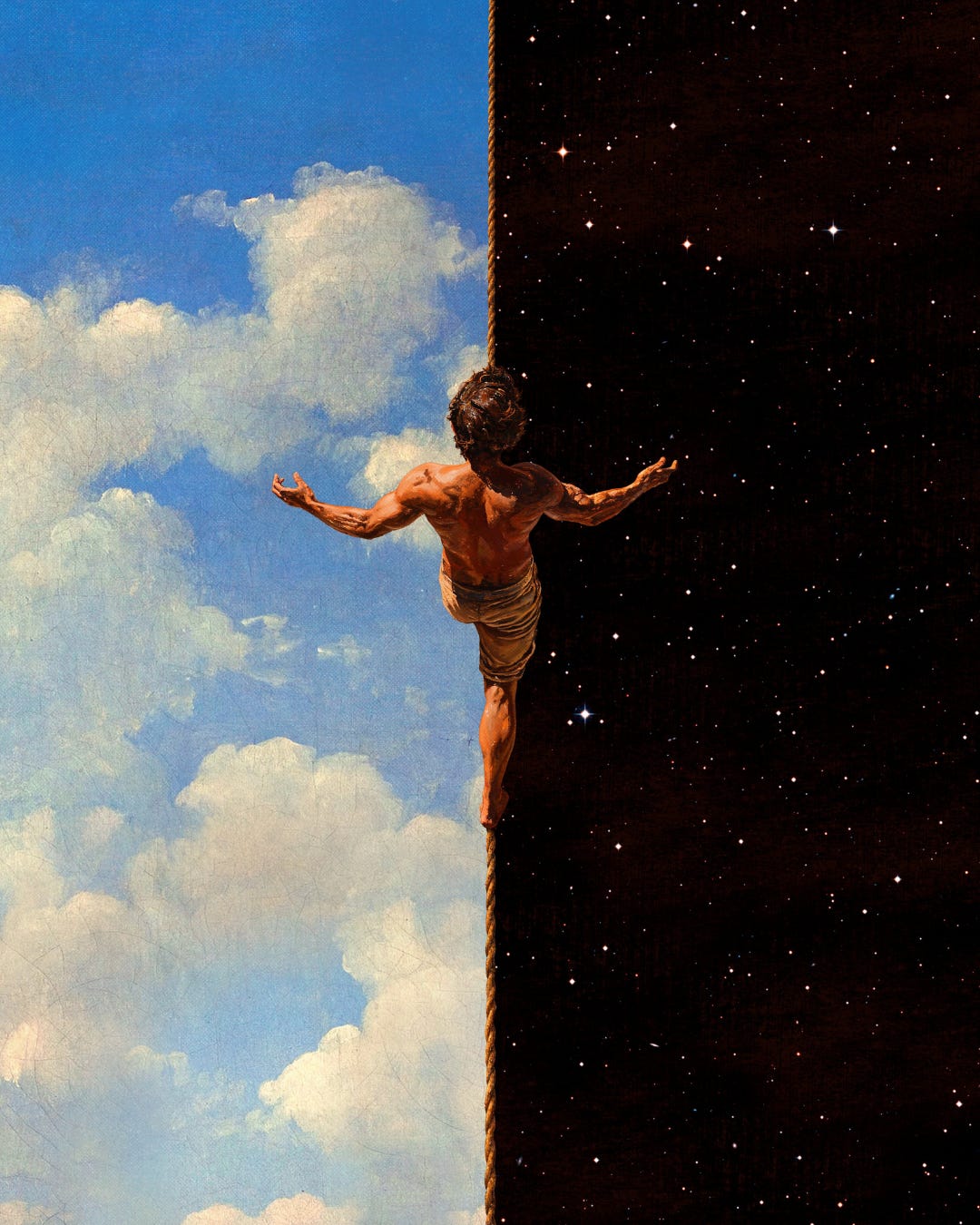
The world mystics give us a few helpful prescriptions for navigating these paradoxes...
#1: Get still. The whole case against original sin fits in one experiment. Sit quietly. Let the noise settle. And notice what’s underneath.
If we were rotten at the core, stillness would surface that filth—fear, weakness, pain... but it doesn’t. What comes up, again and again, when the mind quiets, is warmth. Compassion. A kind of causeless peace. And we realize that the sun never stopped shining. Our window has a few blemishes on it, but we’re going to keep polishing it.
So a contemplative practice—meditation, prayer, breath work, a walk at Kintsugi—is window-washing. We’re not manufacturing the light. We’re letting it through.
#2: When a story about you, here in the external world, changes, try Hakuin’s inquisitive words. Somebody praises you—is that so? Somebody trashes you—is that so? We don’t have to be a Zen master. We can be at happy hour receiving a rude paragraph... but we can reset with that shift.
Look deeply at the play that’s designed to pull us out of ourselves.
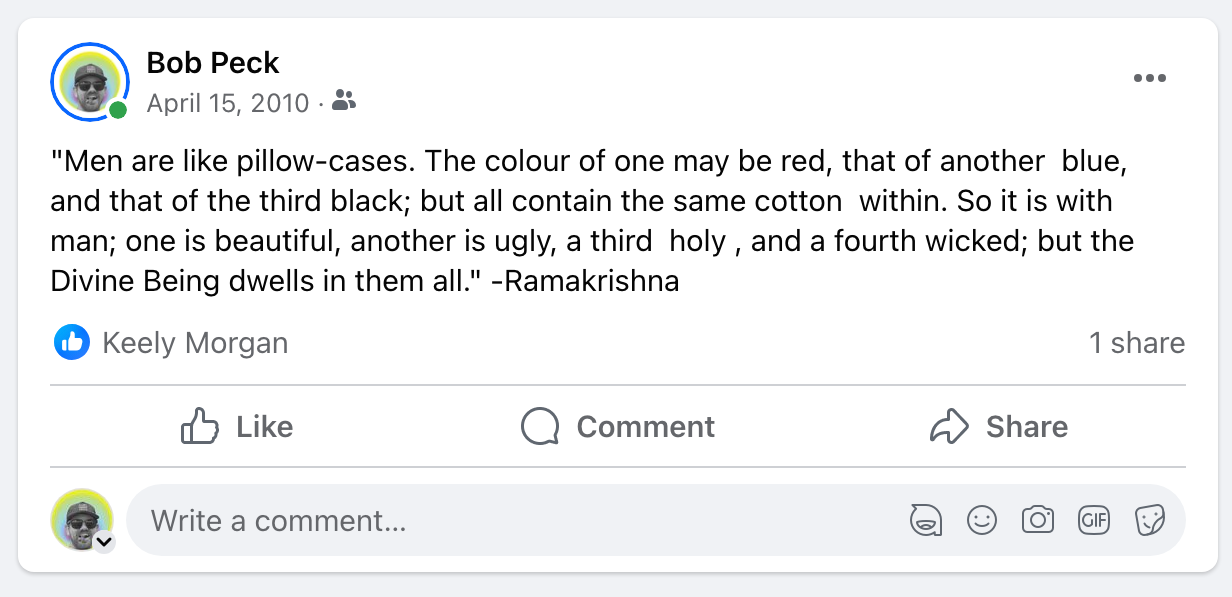
#3: Serve somebody. I’ve spent years studying the mystics, writing about them, posting their quotes on the internet... I found a screenshot of a post I made quoting Ramakrishna on this ancient website called Facebook dot com in 2011. And my cool aunt, Aunt Keely, was the one like. This is my life.
But the pattern here is almost comical in its consistency: they wake up, and then they serve people. Jesus healing the lepers. Maharajji feeding the masses. Amma’s hundred thousand hugs. Ram Dass teaching yoga to inmates at San Quentin.
They aren’t additions to the awakening—it is part of the awakening, continuing to unravel their sense of separateness... because they see the One in All.
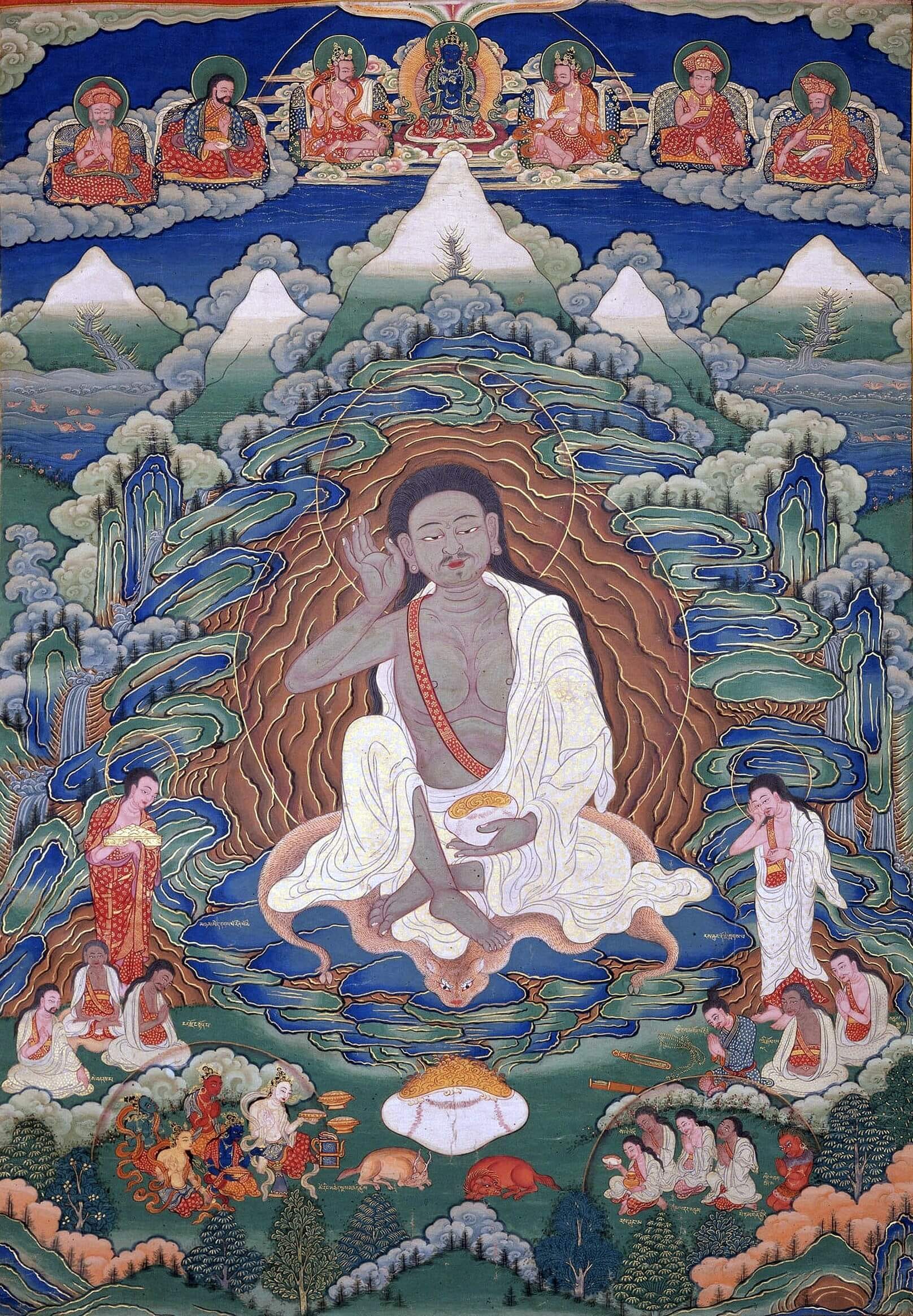
The great mountain yogi of Tibet, Milarepa, says:
“Accustomed long to contemplating love and compassion,
I have forgotten all difference between myself and others.”
The golden crack is both: it’s decorative, and it’s structural. It holds the bowl together. It’s beautiful, and it’s more well-built than before. That makes it a top seller on Etsy.
The suffering is the catalyst for the new form.
Hakuin’s terror of hell—becomes his unshakeable peace. The scandal that destroyed his name—becomes his greatest teaching.
Anandamayi Ma’s trances that got her dragged to doctors and exorcists—that becomes the light that seekers traveled across continents to sit near.
You were never broken in the way they told you.
You were never dirty. But you’ve been cracked—and we’re looking where to add the gold.
The dream is still going. And we can be awake inside it.
The mystics saw through the world. And they loved it anyway.
So, let’s go do that. Thank you.
Thank you for sharing! ❤️
This made me cry…So beautiful Bob!🙏🏼🪷